
American Airlines Ends United Airlines Merger Rumors With Stern Response
Sunday, 19 April 2026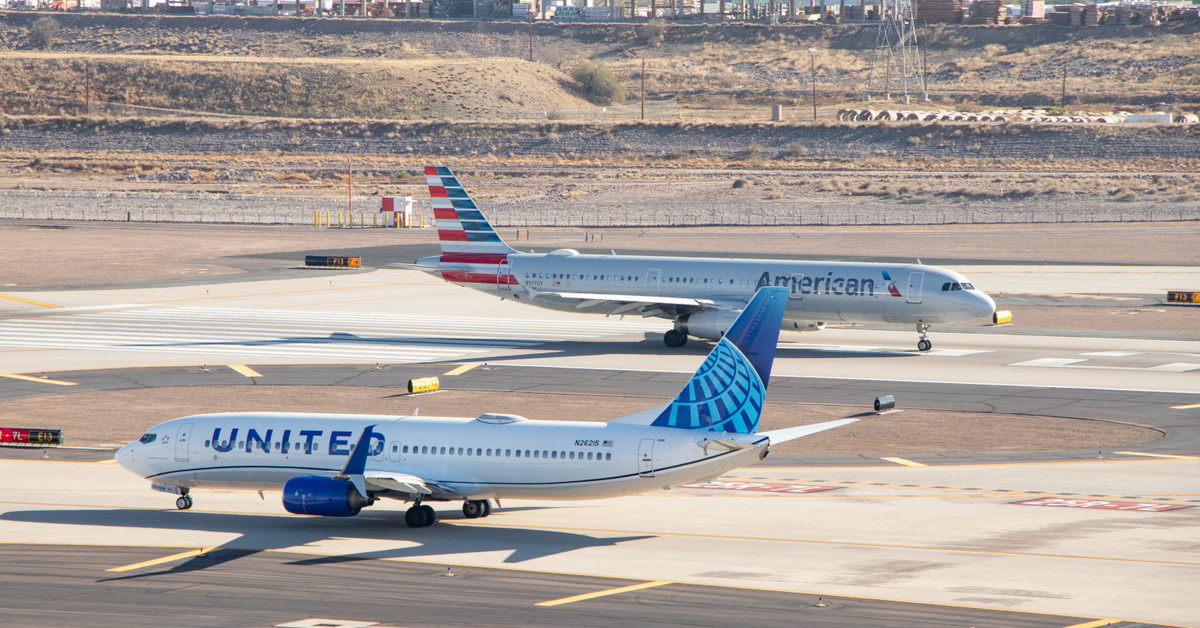
Coco Dollanganger is a travel journalist with multiple years of experience covering breaking news and current events in the travel space, reporting on the impact of world events on travelers.
Prior to joining TheTravel, Coco covered current events for Travel Lens and The News Lens International. Her writing has also appeared on MSN and in China's Business Times. When she is not writing, she can often be found exploring the music of different cultures and visiting historical sites.
Will two of the largest airlines in the U.S. finally consolidate for a greater purpose? Rumors about a merger between American Airlines and United Airlines have been swirling, but AA has just responded bluntly in a statement: "No" to amalgamation with United.
The two airlines have long been in a high-stakes turf battle in Chicago, and United Airlines has made fun of American Airlines with new signs at Chicago O'Hare International Airport. Following its controversial dispute with AA, United also said that it's "drawing a line in the sand," which is why the growing chatter about the possible union came as a surprise to industry circles.
Part of the Big Four airlines in the United States, American Airlines and United Airlines have remained two of the biggest airlines in the world for much of their history.
American Airlines Denies Consolidation With United Airlines
Numerous reports emerged in February that American Airlines and United Airlines were merging, after United CEO Scott Kirby reportedly pitched the idea to President Donald Trump. According to Bloomberg, United CEO Scott Kirby said the union would strengthen the two airlines' status in the international market, as Trump focuses on lowering the trade shortfalls worldwide.
Delta Air Lines, on the other hand, has been silent about the rumored blockbuster merger between AA and United, which, interestingly, may involve JetBlue, according to some industry onlookers.
However, American Airlines has finally grounded the growing talks about a potential consolidation with United. In a statement, AA said that while it focuses on executing its "strategic objectives and positioning American to win for the long term," it is not in any way interested in fusing with United.
"American Airlines is not engaged with or interested in any discussions regarding a merger with United Airlines," reads AA's statement. "While changes in the broader airline marketplace may be necessary, a combination with United would be negative for competition and for consumers, and therefore inconsistent with our understanding of the Administration's philosophy toward the industry and principles of antitrust law."
AA also said that it will continue to work with the Trump administration to "strengthen the broader airline industry."
Airlines have been operating in a complex landscape, particularly after the pandemic, and the union would have created an aviation giant for greater control over both domestic and international markets, but American Airlines has just set the record straight.
American Airlines And United Airlines: The Turf Battle At Chicago O'Hare
United Airlines and American Airlines have been in a long-simmering turf battle at Chicago O'Hare International Airport, and both airlines aren't backing down.
United Airlines, being headquartered in Chicago, uses its hometown advantage to aggressively expand competitively, and has recently unlocked 45 routes for passengers with flights to a new destination in the U.S. United, however, didn't like when American Airlines announced that it will operate 500 daily departures at Chicago O'Hare this spring, with 100 additional peak daily departures, accounting for a 30% increase compared to 2025.
Their fight for dominance at O'Hare has been forged on the ground and has even led AA to acquire Spirit Airlines' two gates for $30 million after losing four to United when the Chicago Department of Aviation reallocated the gates in 2025.
AA and United's competition at Chicago O'Hare didn't stop at the gates and their expanded operations. Even in signs, they throw shade at each other. In January, United Airlines poked fun at AA after rolling out a new ad that reads, "More flights out of Chicago. AAdvantage United," written in all caps.
The Tangible Implications For Travelers
United and AA's rivalry has affected many travelers, particularly at Chicago O'Hare, one of the airlines' major hubs in the U.S. The expansions of the two airlines may have offered more frequent departures and competitive pricing, but the turf war also involves endless negotiations over terminal space, access points, and expansion plans.
United Airlines has been increasing flights by up to 750 daily to gain more control of Chicago O'Hare. AA has also been competitive with flight expansions, and said it plans to increase operations at O'Hare by 21%, according to CBS News.
United Airlines
around 97 gates
American Airlines
around 65 gates
But this has resulted in traffic jams at the airport. At an investors conference in Washington, D.C. in March, American Airlines CEO Robert Isom blamed United for the bottleneck at O'Hare due to its "reckless scheduling" that would make the airport a "gridlock."
But United CEO Scott Kirby laughed it off, reports NPR, and said that the Department of Transportation (DOT) will step in and "play dad and force us to share, and it's going to be fine."
FAA Cuts Hundreds Of Flights At Chicago O'Hare
Amid the turf battle between United Airlines and American Airlines, the Federal Aviation Administration (FAA) has ordered Chicago O'Hare International Airport to cut more than 300 flights per day during the busy summer travel season this year.
According to CBS News, O'Hare had a total of 3,080 flights scheduled for peak summer days, but the FAA restricted the airport to 2,708 flights per day from May 17 to October 24 in hopes of reducing gridlock at the airport and avoiding operational delays and capacity issues.
This will at least lessen the capacity war at O'Hare, a critical hub for United and American Airlines, which continue to fight over access points at the airport.
What It Means To Travelers
The flight cuts in the summer at Chicago O'Hare would have been bad news for travelers, but looking behind the scenes, the FAA's decision offers a more reliable travel experience for fliers, especially during the busiest time of the year.
Travelers will see consolidated and adjusted departure times both for short and long-haul routes, which means planning is critical, especially for those who fly on flexible schedules.
While American Airlines and United Airlines are not down for a consolidation, travelers hope that both airlines' goals will create a more reliable and sustainable spike in airport traffic at Chicago O'Hare and in other hubs across the country.